Questions for Kenechi Udogu
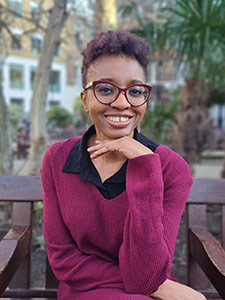
You’ve wanted to be a writer since you were a child. What is it about writing sci-fi that most appeals to you?
I’ve always been a fan of speculative fiction, movies and TV shows. A lot of authors write in genres they enjoy reading, or watching in my case, maybe because we are seeking to share similar stories to what we internalise. Most of my earlier work was fantasy based, but the more I engaged with the technical and environmental aspects of my job as an architect, I found myself putting down more ideas about possible futures and technological advancements. So many sci-fi stories push boundaries by posing possible ways our current realities can play out with the aid of scientific innovations or a change in social mindsets. I find these concepts more liberating to write than contemporary fiction. I have an overactive imagination and like to probe into the origins of systems and the wider impact they could have if tweaked just a little bit. One of the best parts for me is being able to draw inspiration from pretty much anything and, with a ton of research, make something seemingly mundane sound innovative and exciting.
Augmented is your debut, but you were writing for a long time before being published. What kept you going, and what did you learn in that time?
Storytelling is my passion, something I’ve always enjoyed doing, whether in written or oral form. I have so many ideas swirling around in my head, sharing them with people and engaging with their reactions lights a spark in me every single time and keeps me going. Before I got my book deal, I shared my stories online and entered writing competitions to keep me motivated. I’m lucky to have family and friends who encourage (ehem, indulge) my constant requests for feedback on new projects I start writing. Without their honesty and support, I wouldn’t have had as much developmental growth in the years I spent writing without an editor, and it certainly would have been a much lonelier journey. But storytelling means so much to me that I’d still be writing even if I had no audience.
One crucial lesson I learned from posting stories online is resilience. People are quick to let you know what they think about your work – the good and bad. Some comments will be worth learning from, but a lot of times, they can break your confidence. It’s up to you to take a deep breath, distil what to take onboard, and move forward with the positive. I’m still not completely resistant to opinions that are difficult to hear, but I’m kinder to myself about them.
The Branford Boase Award recognises editors as well as authors. What did you enjoy most about working on Augmented with your editors?
The seamless collaboration. Natasha and Jenny did a fantastic job encouraging me to delve deeper whenever they saw the potential for Augmented to be better. I knew my original manuscript was good but would require developmental and line edits. They encouraged feedback from me and offered meetings to discuss trickier suggestions while maintaining the core of the story I had imagined. I had to write a few new chapters and rethink sections of the story to strengthen aspects of it, but it never felt daunting. And I was so happy they were open to me pushing back on parts I felt strongly about keeping. I also love working to a schedule, and all three of us were very like-minded in that way. It never felt like I was rushed or holding back the process.
Your audience is young people. Do you think that gives you extra responsibilities as a writer?
In a way. I want young readers to ponder ethical issues from my stories through a lens they can easily understand. Augmented touches on family relationships, social justice and environmental issues, which can be heavy for any age group. My main responsibility is telling a captivating enough story for the target audience without overcomplicating ideas and technologies, especially when it comes to sci-fi which is often considered too complex.
The award judges commented on how unusual it is to see characters of Akaego’s background as protagonists in this kind of story. Were you conscious of that from the start of the novel and how important is that to you?
Absolutely! I grew up in Nigeria and had a culturally diverse reading experience filled with books by West African and international authors, and yet I was unconsciously writing mostly white protagonists in my younger years. Maybe it’s because outside of African literature, the types of speculative fiction I enjoyed in my childhood in the 80s and 90s didn’t have many black characters, and hardly any black protagonists. Augmented is set in London, and I wanted it to feature lead characters from different underrepresented ethnic backgrounds who are part of a sci-fi adventure that isn’t focused on struggles specifically linked to their ethnicity. It’s important that we normalise stories showing all types of children thriving in different roles and settings so future generations don’t grow up always seeing themselves as an add on to someone else’s story.
What advice would you give to would-be authors for young people?
Despite what social media posts suggest, overnight success stories are actually not that common. Writing what interests you or something you care about is always going to come across as more authentic than following fads. If storytelling is your passion, don’t give up. Put in the work, keep reading new books in the genres you write in to get a flavour of what’s out there, apply to competitions, attend developmental workshops and seminars, be patient, and hopefully your voice will be heard by the right advocates for your work.
Questions for Natasha Brown and Jenny Glencross:

What was it about Kenechi’s writing that most excited you when you first read it?
Like Natasha, I was so impressed with Kenechi’s world building. It was so seamlessly done and immersive, like you couldn’t imagine the future not being this way. It felt all too real and all too close. I was also completely drawn in by Kenechi’s main character Akaego’s voice – I had no idea where the story was going but I knew I was in safe hands and so was just happy to let it take me. It’s a special writer who can do that.
What were the main things you worked on with her as editors?
The main shape of the plot didn’t need too much work, and we already knew the concept was great! So we talked a lot about character, getting deeper into Akaego’s thoughts and emotions, and thinking about how those drove her decisions, to help Akaego’s arc pack an even bigger emotional punch by the end. We also worked on agency, making sure that Akaego was driving the plot with her actions in a way that felt authentic and true to her character. Kenechi is really thoughtful and insightful in her edits and we had lots of great discussions about how to translate all of this to the page – which she pulled off brilliantly.
What are the challenges of editing science fiction and particularly stories set in the future?
It’s all in the world-building, which happily Kenechi is excellent at. One of the main challenges is making sure that there’s enough info on the page for readers to feel properly immersed and convinced and in the world, but not so much that it gets in the way of the momentum or pace, and starts to feel boring or overexplained. Less is definitely more! BUT it’s a fine balance, because without that crucial context, if there are too many unanswered questions, it can feel difficult to properly sink in and go with it.
What do you find most satisfying about working with debut authors?
We think all editing is pretty special, to be honest! The collaborative nature of the process, the way that bouncing ideas off one another can provide solutions or new directions for a story to go in, developing a relationship and trust with a writer that helps to bring out the best in a story, and best of all, that feeling of reading a manuscript for the seventeenth time and it still making you weep or laugh or swoon.
What were your paths into editorial and would you recommend it as a career?
Jenny says: I did a few different work experience placements after I finished university and then managed to get a job at Hachette Children’s (or Watts Publishing as it was then) as a Marketing Assistant. I loved my role there, but quite quickly realised that editorial was where my heart lay, so after about a year I took a job at S&S Children’s as an Editorial Assistant and never looked back! I feel very lucky that I get to work with so many talented writers and read so many brilliant books and call it work.
What is your best piece of advice for debut authors?
Read a lot! Read as much as possible within the genre and age range you want to write for – and beyond – think about why you love these stories and what makes them work, and where your own story might sit within it. And write something you love, because if you’re passionate about it, that will absolutely come through in the writing.
Augmented by Kenechi Udogu is published by Faber & Faber, 9780571385843, £8.99pbk.
Thank you to Kenechi Udogu and to Natasha Brown and Jenny Glencross for answering our questions.